The following article is a composite of extracts from several articles from various sources. The main part of the article was translated from a long article found on the German Wikipedia. Parts of the article below (in blockquotes and cited) are from an article published in the Journal of Fine Arts titled The First Goetheanum: A Centenary for Organic Architecture
What began as a site focused solely on the First Goetheanum grew from a seed into a platform for semi-extended study of Spiritual Science. In that vein of thought I expect this project to take on a quite organic tack. –Anthony
Background
In 1902, Rudolf Steiner was elected Secretary General of the Theosophical Society in Berlin, from which the anthroposophical movement later emerged. The Theosophical Society hosted various events and held an annual congress. For this, rooms were needed that were suitable both for discussing ideological questions and for artistic performances. As early as 1907, Steiner succeeded in organizing the first congress on German soil in Munich. In that year, he began his architectural work by designing the interior of the rooms for the annual congress of the Theosophical Society. Munich now developed into the place where the members of the society traditionally continued to meet, mostly in rented theater and congress rooms. As the number of members grew in the 1910s, the desire arose to carry out spiritual work and artistic creation in their own rooms all year round. Steiner himself feared that without a permanent community center, the movement he promoted would collapse again, and in 1912 he played a key role in the split from the Theosophical Society. His goal was a European-Christian oriented movement, which from then on called itself Anthroposophy.
Steiner's design of the Munich Tonhalle inspired his follower E. A. Karl Stockmeyer to study his ideas of art and architecture. Stockmeyer painted and modelled a dome room with columns in Malsch near Karlsruhe, which had only one opening on the main dome. The opening was designed so that at around 9 a.m. the sunlight would fall on a specific point inside. Stockmeyer showed Steiner his design in the spring of 1908. Steiner was fundamentally very interested in the plans for the so-called Malsche Model. However, a monumental building without a suitable stage and auditorium seemed unsuitable to him. The location in a lonely forest area that Stockmeyer had chosen for it was difficult to access by road. The occult building was realised as a walk-in model; However, Steiner never returned to the site after the laying of the foundation stone on the night of April 5-6, 1909 and after the sudden death of Stockmeyer's wife in 1910, the project was quickly forgotten. Nevertheless, it is considered a model for Steiner's setting of the Sun Temple in his first two mystery dramas. The building, which had been left to decay for many years, was recognized as a cultural monument by Baden-Württemberg in 1976. Since then, an association has been responsible for the preservation and maintenance of the building.
On Steiner's initiative, the architect Carl Schmid-Curtius (1884—1931) was commissioned to prepare designs for a plot of land in Munich-Schwabing. The building project envisaged a double-domed building and was named Johannesbau (Johannes Building) after the main character Johannes Thomasius from Rudolf Steiner's mystery dramas. Steiner's involvement in the plans was limited to the design of the stage and minor detail work. However, the plan for this building met with considerable resistance from the city authorities, the neighboring church and also from the residents, and negotiations to realize the building project proved to be lengthy. In the autumn of 1912, during a series of lectures in Basel, Steiner met the dentist Emil Grosheintz (1867—1946), who felt connected to the movement. Grosheintz invited Steiner to the country estate in Dornach — to the Brodbeck House. Since Steiner now doubted that an agreement could be reached for the building project in Munich, he became interested in the neighboring, barely built-up, slightly hilly area in the Birstal. Grosheintz made the property available and Steiner visited it in March 1913 together with an architect. The area seemed suitable not only for structural reasons, but also for historical reasons. Holy places already existed in the area in pre-Christian times. In addition, the Battle of Dornach took place on a hill that was chosen for the construction of the new center on July 22, 1499, in which Switzerland finally separated from the Holy Roman Empire of the German Nation.
As the Nazi ideology took root in Germany, Rudolf Steiner was unwelcome and threatened in Germany. After two decades of living in Berlin, Rudolf Steiner relinquished his Berlin apartment in 1923 and never revisited Germany.
Alfred Hummel, who served as a member of the Building Office for the Goetheanum, explains of the denial of building approval: "this could be seen as good providence because the building would have run into great difficulties after the outbreak of World War I. Munich would have been a place of great danger after 1933". If the Goetheanum had been raised in Munich, it would have stood a good chance of destruction during World War II since the city was carpet bombed, including with magnesium incendiary bombs, in Allied raids. Such an alternative reality was never tested because shortly after the Munich denial, Dr Emil Grosheintz offered a site for the Goetheanum in Switzerland and Rudolf Steiner took up the offer.
The Zürich dentist Dr Emil Grosheintz, offered a site on the outskirts of the Swiss village of Dornach, the site of a famous Swiss battle of 1499 where Swabian invaders were repulsed. Dornach is a brief commute (train or tram, about 15 km) to the city of Basel, which sits in the north west of Switzerland near the junction of three country borders (France, Germany and Switzerland).
Schmid-Curtius had to keep reworking the original plans for the Johannesbau in Munich in order to take into account demands for surrounding buildings. As a result, Steiner increasingly considered a building in Dornach to be more suitable, especially since the proposed building would be better visible on the undeveloped hill. The plan for the Munich Johannesbau was finally rejected on January 12, 1913 by the Minister of the Interior Maximilian von Soden-Fraunhofen in Munich on the grounds of "aesthetic considerations". After the objection to the decision was also rejected on October 6, 1913, the project in Munich was finally dropped. Steiner was then given the opportunity to obtain building land in the vicinity of Stift Neuburg near Heidelberg - Alexander von Bernus wanted to give it to him - but the planning and preparations for the purchase of the land were already geared towards Dornach in advance, so that Steiner rejected his friend's offer on September 19, 1913. The decision to build in Switzerland was actually made in June 1913, and the foundation stone was laid on September 20 of the same year.
Foundation Stone for the First Goetheanum
First Goetheanum
The solemn inauguration on September 20, 1913 sparked curiosity and fears among the 2100 inhabitants of the community at the time (see "The Goetheanum a temple?" below). Pastor Max Kully from neighboring Arlesheim in particular saw Steiner's teachings as a "serious error" and tried to prevent the construction by submitting a request to the Solothurn government two days before the foundation stone was laid. The government then asked the Anthroposophical Society to give it access to its teachings. In response, it received an extensive collection of literature, which it forwarded to the bishop's chancellery for review. As the latter could do nothing with it, Kully's objection had no effect. The anthroposophists tried to calm the heated atmosphere by issuing statements in the local newspapers, stating that they would "live very quietly on their property as residents of the small villa colony"
The designs for the Johannesbau in Munich were used as the basis for planning the first Goetheanum. This project already contained the idea of a double-domed building with two interlocking dome segments: two unevenly sized domed rooms resting on two unevenly sized rotundas penetrated each other. The large dome above the auditorium stood 18 meters above the stage, which was covered by the small dome, and the highest point of the dome was 27.2 meters above the ground. The domes in the auditorium and stage area were supported by wooden columns with a pentagonal cross-section made of different types of wood. The ratio between the small and large dome was 3:4. The radius of the small circle was 12.40 meters, that of the large 17 meters. The radius of the circle of columns in the stage area was 9.40 meters, and 13 meters in the audience area. Both domes were covered on the outside with blue-green-silver Norwegian slate from Voss (1,893 km or 1176 mi from Dornach). The stage section on the first floor was surrounded by a semi-circular room for the scenery and the adjacent dressing rooms, which were arranged in the style of a transept. The plinth was cast in concrete at Steiner's request, as this allowed for a special design and enabled the building to adapt to the surrounding mountain formation of the Jura. The concrete basement was completed in February 1914, so that work could begin on the wooden scaffolding for the superstructure.
Elevation Drawing of the Johannesbau
Site Plan for the Johannesbau
The superstructure on a concrete base with Art Nouveau elements was also made entirely of wood. The principle of metamorphosis was to be the supporting element of the entire building concept. The shapes of the capitals developed continuously from the previous one. It was the same with the architraves connecting the columns. The ceiling paintings of the two domes were all executed with plant colors. Steiner developed a special glass cutting technique for the motifs on the windows.
Dr. Steiner with his Model of the First Goetheanum
The intention was not only to achieve a revival of form, as expressed in Art Nouveau, but also to create an organic, sculptural building that would become the formative element of architecture. In the interplay of the arts (painting, sculpture, architecture) in the interior design, an important element of Art Nouveau was achieved for the first time: "The integrated Gesamtkunstwerk: a unified building idea had included all the arts." This realized another ideal of modern art, the idea of the community of work: skilled workers, artists and untrained assistants worked together to create the common building. This ideal was so strong among the participants that even during the First World War, members of seventeen hostile nations worked together. The construction work continued even during the war.
Steiner emphasized that the location in Dornach had a special destiny: "It is not our fault that the building will not be erected here [Munich], it is our karma. It is our fate that it is being erected in a lonely place, but in a place that is important for the spiritual life of modern times due to its local location." His followers had no choice but to follow him to Dornach if they wanted to be close to the spiritual center. The building therefore triggered the settlement of many anthroposophists, who built houses on the Dornach hill (buildings in the surrounding area). The influx doubled the population of the community within a few decades. As he was not happy with the appearance of some of the newly built houses, on 23 January 1914 he appealed for them to be designed in such a way that they would be seen to belong to the "great whole". The emergence of the settlement in Dornach was part of the movement that began at the end of the 19th century and gave rise to a number of life-reforming artists' colonies, such as Monte Verità in Ticino.
In the first quarter of 1914, up to 600 workers were employed on the construction site and the topping-out ceremony was held on April 1 of the same year. By 1917, over 3.6 million francs had been invested in the Johannesbau; the land was valued at 218,000 francs. However, the financial situation deteriorated, so that the work stagnated.
It was not until 1918 that the name Goetheanum prevailed over Johannesbau. Steiner revered Johann Wolfgang von Goethe, who in addition to his poetry, which relied in part on esoteric points of view, also produced scientific works and his Theory of Colors. Goethe used his theory of metamorphosis and the discovery of the "primordial plant" to explore the spiritual and mental worlds. Steiner found starting points for his efforts to gain knowledge in Goethe's work. The reason for the renaming was to end speculation about the meaning of the name Johannes and the association with John the Baptist or John the Evangelist. In addition, naming the school after a recognized poet and writer seemed more appropriate, as anthroposophists were still struggling for recognition in society at the time. The building was finally opened under the name Goetheanum on 26 September 1920.
The Great War
In the Europe of the time [i.e. during World War I], destruction on an
industrial scale was the order of the day. However,
Switzerland remained neutral throughout, and her
neutrality was honoured by all the belligerents for
the duration.
Construction of the Goetheanum at Dornach
began in 1913. Construction carried on through
the years of World War I (1914-1918). The Russian
artist, Assya Turgeniev, recalled: "Already at the
beginning of hostilities Dr Steiner tried to speak to
us about the background to the events of the war
… The stirred up chauvinistic moods of his
listeners thrown together from all quarters of the
globe (we were from about 17 different nations)
that did not allow him to continue".
Marie Steiner wrote that, as the war stretched
on, the work force was depleted by call-up notices:
"one after another our artists were called away to
the scene of the war. With very few exceptions,
there remained only those men who belonged to
neutral countries, and the women".
The Goetheanum was built during the Great War
using volunteer and paid labour. They came and
went. Amongst the privations and avalanche of
news of death and destruction of the war: "the work
went on as best it could and as far as our strength
allowed". "From all quarters of the globe
people gathered in Dornach to help with the
building. It was a motley, many-sided, multilingual
company". "Our carving group grew to
about 70 in number, not counting those who put
in a short appearance … All financial affairs were
attended to by Miss Stinde. For those who needed
it she arranged a modest remuneration".
The artist Assya Turgeniev remembered: "we
were only a bunch of dilettantes … Only the
knowledge that we were working together on a
great future task and Dr Steiner's helping guidance
brought order into this chaos. It remains a
wonder that the work progresses without any
kind of organisation".
With the outbreak of war, "A heavy gloom settled
over Dornach … a European war, was now on our
very doorstep. Goetheanum volunteers
were called up to return to their respective
countries: "Many friends had been recruited and
had to depart". "Our group of woodcarvers grew less and less as further friends were
called up".
On the night of January 1, 1923, the building, which was insured for 3,183,000 Swiss francs, was completely destroyed by arson; all that remained was the concrete base.
According to investigations, the fire must have been started as a smouldering fire between the walls so that it could spread slowly and unnoticed. The arsonist or arsonists were never identified. As the members of the anthroposophical movement were repeatedly attacked and mobbed, one theory suggests that the fire was set by a group of people who were hostile to the anthroposophists. Steiner commented on this as follows:
"It was precisely on the occasion of the terrible fire accident that it again came to light what adventurous ideas were being linked in the world to everything that was meant by this Goetheanum in Dornach and what was to be done in it. There is talk of the most terrible superstitions that are to be spread there."
– Rudolf Steiner in a lecture in Basel on April 9, 1923
We stand to-day under the sign of a painful memory, and I want to place what we have to take for the theme of our lecture to-day into the sign of that painful memory. The lecture I was able to give exactly a year ago in our old Goetheanum,—those of you who were present will remember how it took its start from descriptions of Nature, of relationships that can be observed in Nature on Earth, and led from these up to the spiritual worlds and the revelations of the spiritual worlds in the writing of the stars. And you will remember how we were able then to bring the human heart, the human soul and spirit in their whole nature and being into close connection with what is found when one follows the path that leads away from the earthly into the distant stellar spaces, wherein the spiritual writes its Cosmic Script. And the words that I then wrote upon the blackboard, writing for the last time in the room that was so soon to be taken from us, bore within them this impulse and this purpose: to lift the human soul into spiritual heights.
A local newspaper, the Basler Nachricten reported
the news of the New Year fire at the Goetheanum:
"The Goetheanum in Dornach-Arlesheim is on
fire, was the terrible alarm message that flew like
wildfire … just before the bells sounded in solemn
ringing … On New Year's Eve … at 7 pm, the
Goetheanum had a presentation of Eurythmy and
a lecture by Rudolf Steiner … The last audience
had left the lecture hall by 9.45 pm …
immediately after the seriousness of the situation
was clear, the calls for help were despatched to the
surrounding villages and to Basel … The
Dornachers were the first to arrive at 11:45 pm,
followed by the Arlesheimers a quarter of an
hour later … Because of repair work, there was
scaffolding where the fire was first seen".
Rudolf Steiner put the fire as starting between
5:15 pm and 6:20 pm.
Newspaper report of the fire
As it burned
Before & after comparison
Rudolf Steiner related that: "one hour after the
last word had been spoken, I was summoned to
the fire at the Goetheanum. At the fire of the
Goetheanum we passed the whole of that New
Year night". He stated that it was "exactly at the
moment in its evolution when the Goetheanum
was ready to become the bearer of the renewal
of spiritual life".
A newspaper gave an account of the events:
"When the double cupolas fell in, there shot up
heavenwards a giant sheaf of fire, and a torrent
of sparks threatened the whole neighbor-hood so
that fire-men had to be sent in all directions to
prevent the spread of disaster". Later, on
New Year's Day "The sky was veiled in clouds
as if to check the great outpouring of people
which took place from Basel and its neighborhood. For nearly the whole population there was
one urge: Off to Dornach! Hour after hour
unbroken streams of people climbed the muddy
roads and slippery fields, whilst other streams,
equally unbroken, flowed down again".
Rudolf Steiner later referred to "the pain for
which there are no words". However, on
the day, as Albert Steffen relates, Rudolf Steiner
kept his nerve and declared the continuance of
the New Year's programme: "In the morning Dr
Steiner … was still there … 'We will go on with
our lectures as notified', he said, and gave
instructions that the pools of water in the
'Schreinerei' (the temporary shed used for
lectures)[2] and the dirt carried in by muddied
shoes should be removed".
Albert Steffen (1884-1963), Anthroposophist,
writer and editor, wrote of the seat of the fire:
"Unfortunately a scaffolding, necessary for
certain work, had been put up just in the place
where the fire was first noticed". A
local Basel newspaper had reported likewise:
"Because of repair work, there was scaffolding
where the fire was first seen".
Of the Goetheanum fire, a Basel newspaper
reported: "Dr Steiner … According to him,, who
will probably know his way around the
construction of the building, the fire must have
started between 5:00 and 7:00 in the evening .…
The smoke was noticed a little after 10 pm in
the so-called 'white room' on the third floor". The room, the apparent seat of the fire,
was used by one or some Eurythmists as a
change room. It was reported that "there
were no electrical systems at the fire site". A
discarded cigarette butt, a neglected candle or a
portable camp stove or heater (the outside
temperature would have been hovering around
0° C), or a flimsy Eurythmy costume draped
carelessly on a hot light bulb are candidates as
potential ignition sources.
The Goetheanum was insured for CHF (Swiss Francs) 3,800,000
and with a further CHF 500,000 for furniture
and equipment. A proof of contributory
negligence would have voided or severely
prejudiced an insurance claim. This, combined
with the prevailing persecution complex of the
Anthroposophists, was a great motivation for
fuelling suspicions of arson. To this day, the
cause of the Goetheanum blaze remains an open
question. The timely payout of the insurance
facilitated the rebuild of the Goetheanum, and
the local Building Insurance Act was revised "to
protect the state institution against such
disasters".
The following is excerpted from the book The Green Snake, the autobiography of Margarita Woloschin. She was a Russian student of Rudolf Steiner from an early age and, though she was not present in Dornach when the fire occurred, she arrived on the scene the next day and recorded first-hand accounts related to her by those who were there on the inside of the structure as it began to burn.
On New Year's Eve the consolate informed me by telephone that I could fetch my passport with the Swiss visa the next day. Hardly had I put down the receier, than the telephone rang again. Someone who had just received the news by telephone from Dornach, asked me to tell my host that the Goetheanum was burning; but since no on ewas left in the lecture hall, he did not need to have any worries about his wife.
The Goetheanmum on fire? How was that possible? There were night watchmen; there was a fire brigade in Arlesheim. It could not be serious. And we knew how difficult it was for such hardwood to catch fire, in heating our stoves with leftovers from the wood sculpture.
I travelled the next day and, at noon on January 2, I went up the hill from the Dornach train station. It was raining and the fog so dense that one could hardly see more than a few steps ahead. I had been afraid to ask the conductor on the train about the fire. I met no one on the way up, but noticed that the mud on the paths had been trodden to a mush. I went directly to the building. The mist veiled it. I stepped up close to the concrete terrace and saw that the entrance doors, carved of wood, were compeletly unscathed. So everything was alright! Then I attempted to see through the mist to the second story, but I could not see anything. I went around the building. The wooden buildings nearby were intact, but now - from the east - I saw clearly through the mist: There were no cupolas up there and no walls; there was nothing.
I went down the hill to the canteen and saw pale faces, eyes tired from lack of sleep, coats encrusted with mud. I learned that the building had burned the whole night and the day before as well. Everyone greeted me with, "Too late!"
But these people I not longer experienced as cold, self-assured strangers, as in the Hague. I this destiny we were profoundly united; a community that had lost what was most precious.
A eurythmist related how at five o'clock in the evening of New Year's eve a eurythmy performance was to take place. She had the feeling as if something heavy weighed in the air. In her dressing room, she found the wall mirror lying on the floor, broken in pieces. I had hung on the wall separating her dressing room from the White Room. That made a very peculiar impression on her. It was not comprehensible how this could have happened, and it looked as though the nail had been knocked out from the other side. There was the desire to notify Rudolf Steiner about it, but he could not be found at the moment. Another artist had heard a mysterious noise, like a storm wind between the walls. She was laughed at, since there was not wind at all outside. During the performance, she had the feeling that all her efforts to fight against something she sensed as a dark and oppressive were in vain.
The Prologue in Heaven was performed. In the evening there was a lecture in which Rudolf Steiner wrote the words of the "cosmic communion" on the blackboard. After this lecture a group of people had the initiative to erect a building for the Mystery Plays in Munich. They discussed how it might be possible to get together the money still lacking to complete the building, by means of an advance ticket sales for the Mystery Plays in August. Then, they said, the actual requirement of the Goetheanum would finally be met. At this moment, Alexander Porzo who was a night-watchmen in the building (in Moscow he had been a lawyer) came and reported that he had smelled smoke in the Goetheanmu, but that he could not find the source. When they followed him in to the auditorium, they saw that the smoke was coming from all sides and from every crack; thin films of smoke could be seen spreading outside as well. It was discovered that there was, in fact, fire everywhere between the walls. Hence, this must have continued already for quite some time. Rudolf Steiner was notified at once. He came and gave orders, which it was, however, not possible to carry out, since the available means of extinguishing fire were inadequate. The Arlesheim fire bridage was called and then the one in Basle. At midnight, when all the bells were ringing in the New Year, the flames broke through between the two cupolas, illuminating the surrounding landscape; now of such significance for the history of Europe.
All the members participated in the attemt to extinguish the fire; models were salvaged; the central group of the Christ statue, not yet installed in teh building and still located in the wooden shed, was brought to safety on an adjoining meadow. Rudolf Steiner was diverted from the fire by people needing help, having been overcome by smoke. Then he went around the hill. In glowing outlines the building revealed its architecture, its sculptural forms. The organ sounded asn each of the various metals used lit up in a different colour amid the flames. A tremendous, inexpressible sound arose from this sea of fire, blazing in every colour The columns had burned like torches. The coloured glass of the windows melted. At last, the two columns of the entrance to the auditorium, together with the architrave uniting them, stood out like a firey gateway.
...
After the fire, Rudolf Steiner intensified his activity still further. The number of lectures he gave over the next few years seems incredible today. All were fundamental. Their whole orientation may be characterized in quoting the title of one particular lecture series, Man as Symphony of the Creative Word. This theme took on a quite definite character according to the field of work of his listeners - the educators, the doctors, economists, farmers, priests, eurythmists, actors and musicians - and went directly into practical questions. Before that, the Word had spoken through the building, now lost, by means of form and colour. It was as though the essence of what had been embodied in it, streamed down again onto the earth, freed by the flames from material substance and raised to a new existence, fruitifying every field of culture.
Jakob Ott
The Arlesheim watchmaker and anthroposophist Jakob Ott, who was said to have opposed Steiner's views, was also under suspicion. According to the investigation files, Ott was seen at the Goetheanum on the day of the arson and died there as a result of the "events". A body found there could be attributed to him with a certain degree of probability. According to more recent research, however, Ott is said to have died in an accident while helping with the fire-fighting work.
Assya Tergeniev recorded that: "When the
glowing ashes had cooled, some days later, a
human skeleton with a deformed spine was
found therein. This deformity was the same as
that of a watchmaker who had disappeared at
the time of the fire. It was officially announced
that he had come to grief while helping with the
rescue work".
A Basel newspaper reported that "Human
remains were found in the rubble of the burneddown Goetheanum on Wednesday [10 January].
It is not yet certain whether it is the missing
watchmaker Ott … These are the bones of a
single person, who presumably fell from the
floor of the dome into the depth of the
basement. The skull was smashed … no one
apart from the watchmaker Ott has been missing
since that fateful night … the bone remains were
almost completely covered with slate residue
from the roof of the dome. The casualty must
have plunged into the stage basement below the
collapsing dome at 12 midnight. Although all
fire-fighting teams had withdrawn at 11:30 pm
in view of the building, which was at risk and
could no longer be saved, it is easily possible that,
due to the thick smoke, a person who might already
have been stunned had not been noticed".
There are three Goetheanums, the first build, the second build, and the 'spiritual Goetheanum'. Dr Ita
Wegman stated: "When the Goetheanum was taken from us by the disastrous conflagration of 1922 …
Though we no longer possessed it on the physical plane, spiritually the Goetheanum stood there still;
spiritually we were united with it" (Wegman, 1925).
Just three months after the fire, in March 1923, Steiner published his plans for the reconstruction in the weekly journal Das Goetheanum. His idea was not only to provide space for artistic and scientific work, but also to create room for the Society's administration. The new building was to be significantly larger and thus also the floor height. In a speech on June 17 of the same year, he spoke out against rebuilding the building in its old form. At this point, it remained unclear how the construction project was to be implemented. Although the insurance money was available after the loss, there were moral reservations among the anthroposophists about using this "other people's capital" for this purpose.
Steiner specified his building plans as early as December 31, 1923. He stated that the new building was to be less round, but a "partly round, partly square building" and made entirely of concrete. The upper storey was intended for the large hall with stage, the middle storey for scientific and artistic work, and the first floor was to provide space for the rehearsal stage, which was later replaced by the so-called Foundation Stone Hall. At the time, he estimated construction costs of 3 to 3.5 million francs Steiner was already aware at the time that he would be breaking new ground with his project. In his New Year's Eve lecture, he said:
"If the Goetheanum is to come into being as a concrete building, it must emerge from an original idea, and everything that has been achieved so far in concrete construction is actually no basis for what is to be built here."
Precisely because it is science, art and religion at the same time, anthroposophically oriented spiritual science had to establish its own architectural style, disregarding all conventional architectural styles. Of course, one can criticize this to no end; but everything that appears for the first time is imperfect at first, and I can perhaps assure you that I know all the mistakes best and that I am the one who says: if I were to rebuild the building a second time, it would be based on the same spirit, on the same laws, but it would be completely different in most details and perhaps even as a whole. But if anything is to be tackled, it must be tackled once, as well as one can at that particular moment. It is only by carrying out such a work that one really learns to know the actual laws of one's being. These are the laws of destiny of spiritual life and spiritual progress, and these have not been violated in the erection of the building at Dornach.
At the end of March 1924, Steiner made a 1:100 scale model of the new building from a reddish-brown modeling clay from England (Harbutt's Plasticine). The model stood on a six-centimetre-high block of wood, which was intended to approximate the substructure and correspond roughly to the floor plan of the double-domed building. The more precise design for the plinth substructure was not produced until autumn 1924. Once the model was completed, several architects under the direction of Ernst Aisenpreis began to draw up the plans so that the building application could be submitted to the government of the Canton of Solothurn. The ten plans and the application were submitted on May 20, 1924. After examining the application, the cantonal government granted permission for construction on September 9, 1924, but imposed conditions that still had to be taken into account. The first structural condition concerned fire safety in the stage area and the installation of a fire extinguishing system. The second condition related to the color design of the façade and roof surfaces: they were to be adapted to the terrain according to the council's ideas. The government council commented on this in the minutes as follows:
"[…] As far as the building forms of the project are concerned, it must be noted that they cannot be compared with the traditional building forms of our country, because the building does not adapt to any architectural style in its external forms. The question arises: How will the building relate to the surrounding villages and landscape? It should be noted that due to the considerable distance from Dornach and Arlesheim, the building and the existing anthroposophists' houses in the surrounding area, which are similar in character to the planned temple, should be regarded as an isolated group of buildings. Numerous groups of trees close off the entire settlement towards Dornach. The details of the building only come into view in the vicinity, so that the group of buildings in the surrounding villages is not impaired in the sense of protecting the local heritage.
Viewed from a greater distance, the building will only present itself as a silhouette, and in our opinion this will be less obtrusive than was the case with the earlier domed building. The building will blend in all the better with the terrain if the right colors are used for the roof surfaces (slate covering) and the façade.
However, the building will never appear down-to-earth and only the future will teach us whether we can come to terms with this type of construction."
From Old to New
Demolition work on the old base building began in early 1925. In addition to the terrace, parts of the foundation were also blasted away. A short time later, on March 30, 1925, Rudolf Steiner died at the age of 64 and thus did not live to see the completion of the second Goetheanum. The Anthroposophical Society set up its own building office to carry out the construction work, providing skilled workers, materials and construction machinery on its own. This was a departure from the approach adopted for the construction of the first Goetheanum, where the Basler Baugesellschaft was engaged as contractor and was not entirely satisfied with the result. Between 1925 and 1928, an average of 100 people were involved in the construction work, including carpenters, joiners, iron benders, bricklayers and cementers, foremen, concreters, electricians, mechanics and painters. The company received many letters, some of them from abroad, from people who wanted to help with the construction; some of them had already been involved in the first construction. The construction work itself progressed well: the summer of 1926 saw the start of the timber boarding and steel reinforcement of the roof truss, so that the topping-out ceremony could be held on September 29 of that year (St. Michael's Day). Collecting donations proved to be problematic. In addition to the approximately 3.1 million francs from the building fire insurance, a further 1.5 million francs were needed to cover the costs. In addition to circular letters, illustrated lectures were also held in many European cities from 22 May to 9 November 1927 to raise funds.
On September 29, 1927, a wooden statue was transferred to the eastern part of the still unfinished building. The construction site attracted a great deal of local and international attention and was also visited by personalities from the fields of architecture and politics. In addition to Imai Kenji, who visited the building in 1926, Le Corbusier and the then Swiss President Giuseppe Motta also visited the Goetheanum construction site in 1927. The general public also became increasingly interested in the building. Thousands of people asked if they could be given a tour of the unfinished building. For this reason, a guided tour took place on July 1, 1928, which was attended by over 1000 people and was officially opened on September 29, 1928.
The Representative of Man
With its enormous dimensions, the concrete building of the second Goetheanum stands as a unique example of "organic architecture". The sculpturally designed exterior walls with their double-curved surfaces differ from earlier attempts to design the concrete wall freely, such as that of Antoni Gaudí. The function of the columns is not only seen as a load-bearing, soaring one, but also one that goes from top to bottom, connecting the building to the ground. In addition to fire safety, concrete was probably also chosen because it was a relatively quick and inexpensive building material to rebuild.
Challenges Over the Years Concerning Goetheanum II
By 1929, the building had cost 4,765,491.90 francs, including a partial interior extension, and by the end of 1934 it had cost around 5,118,000 francs. Because the majority of the donations came from Germany, construction work stalled during the Second World War and further interior work could only be continued in the 1950s. The Great Hall remained unfinished until 1957 and was only completed at the beginning of the 21st century with its ceiling paintings, new seating and the hotly debated pillars. In total, the construction costs amounted to seven million Swiss francs, which corresponded to an inflation-adjusted value of around 98 million francs in 2005.
The Goetheanum was used as a half-finished shell for many years after its opening. The south staircase was completed in 1930, the Foundation Stone Hall with seating for up to 450 people was built from 1952 to 1989 and the first extension to the Great Hall took place between 1956 and 1957. The Main Hall only received its final design between 1996 and 1998. The west entrance (1962-1964), north wing (1985-1989) and the English Hall with a capacity for 200 people (1969-1971) were only completed decades after the opening in 1928.
At the time of construction, the long-term properties of concrete were not yet well known. Due to the sometimes very thin concrete layers of the load-bearing concrete framework — only six centimetres thick in places — and a water-cement ratio of more than 0.5, water gets into the reinforcement, causing it to rust. The corroding steel expands and also blows off small pieces of the outer concrete, resulting in double the damage. The first comparatively small-scale repair work on the façade was undertaken in the 1970s, for which the entire building had to be scaffolded. The renovation of the terrace followed in the 1980s. During the renovation work in the early 1990s, the concrete had to be removed piece by piece to a depth of around five centimetres and the rust removed with a high-speed water jet at 1.5 times the speed of sound. A new layer of concrete could then be applied. The work on the monument was financed with donations and grants from the canton of Solothurn. The current (August 2011) external appearance can be described as good, apart from a few areas; further work will nevertheless be necessary in the coming years.
Buildings and Sites in the Surrounding Area
The organic form of the Goetheanum is also continued in the landscaping of the hill with outdoor furniture such as benches, garden gates, lanterns and markers. This also includes a viewing platform that can be reached via seven circular steps. This is located at the height of the so-called dragon's tail, from which a view of the north-west side of the Goetheanum is possible. The excavated material from the Goetheanum was used to create the hilly landscape.
Boiler House
Surrounding the Goetheanum are a number of private residences, administrative and functional buildings, some of which were also designed by Rudolf Steiner. The concept of the "colony" had already emerged during the construction of the first Goetheanum. One of the most striking of these buildings is the boiler house, erected in 1915, the first concrete structure in this ensemble. The two-storey substructure with windows on each floor is topped by a sculpturally shaped superstructure, whose design is reminiscent of a sphinx. The chimney is concealed behind a branching, tree-like structure. In Steiner's view, the smoke is divided into a physical and an ethereal part; the physical part is represented by the chimney, the ethereal part by its lateral ramifications, which escape from the sides. The boiler house located on the northern edge of the hill is still used to supply heat today. However, in the early 1990s, the original coal-fired heating system was replaced by a gas-fired combined heat and power plant. This made it possible to heat a further 15 buildings. The boiler house, which is connected to the Goetheanum via an underground tunnel, produces around 250 kW of heat and 190 kW of electricity.
Das Heizhaus
Transformer House & Dining House
Another remarkable functional building is the transformer house at a road junction in the south-west of the hill. Designed by Rudolf Steiner and built in 1921, the building stands out with its small cubic projections with gabled roofs reaching in all directions. The overhead power lines branch off at its gable ends. Today, it is operated by the local electricity company and thus continues to serve the public power supply. It is not known whether Steiner had the safety aspect in mind when he separated the transformer and boiler house from the Goetheanum. He understood technology as an ahrimanic-demonic force that was to be revealed by means of "essential" architecture in order to render its negative forces harmless. The building known as the Speisehaus (Dining House) stands on the same crossroads opposite the transformer house. It serves as a café, restaurant, boutique and bakery.
Das Transformatorhäuschen
Workshop & Studio
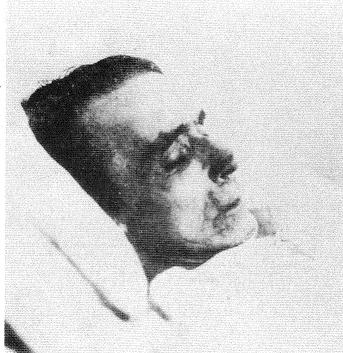
Southeast of the Goetheanum is the carpenter's workshop from 1913. It is a simple, timber-framed building and was the carpenter's workplace during the construction of the first Goetheanum, but also a venue for cultural events such as lectures and performances. The building was erected as a temporary solution for the carpentry and joinery work on the first Goetheanum. The barrack-like building, originally without foundations, today occupies an area of 2800 square meters and was used for rehearsals and as a lecture hall when the Goetheanum was not yet completed. The dilapidated carpentry complex, which also includes the high studio, was extended and renovated in the 1980s. The buildings were also given foundations under their wooden construction. The Hochatelier (High Studio), where Rudolf Steiner also worked, became his sickroom from October 1924, where he spent his last six months and died on March 30, 1925.
The High Studio is a work-space adjacent to the
Schreinerei. Its high ceiling offered a
space to create the Representative of Humanity
sculpture (Halle & Wilkes, 2010). The artwork is
a timber sculpture nine metres tall. It was a joint
and collaborative work of Rudolf Steiner and the
English sculptor Edith Maryon (1872-1924). The
sculpture survived the Goetheanum I fire of
New Years Eve 1922/23 and it is now housed in
Goetheanum II.
Das Schreinerei (Carpentry Workshop)
Hochatelier (High Studio)
At work on the Representative of Humanity in the Hochatelier
Rudolf Steiner with the Representative of Humanity in the Hochatelier
Rudolf Steiner's studio in the Schreinerei complex, adjacent to the Hochatelier (where he retired in illness and died)
Glass House
The glass house or glass studio, also built in 1914, consists of two separate cylindrical structures with separate domed roofs. Between the cylinders there is a balcony on the roof of the central building, which can be accessed from both shingle-covered domes. The glass house was set up to process the windows installed in the Goetheanum. Today it is used by the "Natural Science Section" and the "Section for Agriculture" of the School of Spiritual Science. The west dome houses a seminar room, the east dome houses a library and the lower floor houses workshops and offices. Due to its shape, the wooden house is remotely reminiscent of the first Goetheanum building.
Das Glashaus (Glass House)
Publishing House 1924
This building, built for the anthroposophical publishing house, Philsophisch-Anthroposophisher Verlag, served as a warehouse for the many books. The publishing company had to move to Dornach from Berlin during the growing economic recession in Germany after WWI. As the building was urgently required and there was little money for it, a timber-frame construction was used. On a floor erected above the entrance, the manager of the publisher had her desk. This side of the building is also the only one that has any windows – the main area being lit up by a large skylight. (Source: Anthroposophie, Arts & Architecture)
Das Verlagshaus (Publishing House)
Rudolf Steiner Halde
A substantial building, and, after the Schreinerei,
Rudolf Steiner Halde is the building closest to
the Goetheanum. It comprises
several buildings kludged together over time (it
includes Haus Brodbeck). Inside are a large
Eurythmy space (Eurythmeum), studio spaces,
and offices.
Haus Brodbeck (Brodbeck House) (left); Eurythmeum (Eurythmy space) (right)
Duldeck House
To the west of the Goetheanum and not far from the footpath that leads to the west façade as the central axis, the Duldeck House, built of concrete in 1915 on the edge of the hill on a small round square, has housed the Rudolf Steiner Archives and the Rudolf Steiner Publishing House since 2002. The two-storey house is structured by a belt cornice, pilasters and curved beams and has a strongly modeled roof that also houses rooms.
In 1912 Rudolf Steiner and Marie von Sivers were invited by family Grosheintz to their summer house on the hill in Dornach. The family donated most of the plot of land where the first Goetheanum was subsequently built. Out of gratitude, Rudolf Steiner had the House Duldeck built.
In September 1913 the Duldeck project was initiated under the guidance of Rudolf Steiner; its construction started in February 1915. The residence, situated in immediate proximity to the Goetheanum, is one of the most innovative of the early 20th century buildings in reinforced concrete. Its shaping however does not stand alone but, like the other buildings on the Goetheanum hill, they were designed by Steiner as a metamorphosis of the central building.
Front of Haus Duldeck (Duldeck House)
Rear of Haus Duldeck (Duldeck House)
Entrance of Haus Duldeck with the Goetheanum in the distance, May 1921
Friedwart House
Haus Friedwart (pronounced "Free-Dwaort" and means "Protector of Peace") is the closest visitor accommodation to
the Goetheanum. It offers modest
guest-house style accommodation, and is just
paces from the Goetheanum. The Goetheanum
is not well serviced for visitor accommodation;
there is no premium accommodation.
The Eurythmy Houses (1921) are a group of three residential buildings which were erected for the eurythmists working at the Goetheanum. They were co-designed by the sculptor Edith Maryon who also lived in one of them. The two extensions of the first building have merged — what used to be lateral extension is now the main theme. The cupolas reappear modestly in the form of bays.
Eurythmiehäus (Eurythmy Houses)
Jaager House
Haus de Jaager in Dornach was commissioned by Isabella de Jaager for the artistic estate of her late husband, the Dutch sculptor Jacques de Jaager, who had died young in 1916. The building was designed by Rudolf Steiner and constructed in 1921/1922. The opulent wood carvings inside the building were carried out by Jacques de Jaager's former colleagues, with whom he had worked until his death on the First Goetheanum. Haus de Jaager was built as a combination of residence and exhibition studio and conjoins architecture and craftsmanship in an artistic synthesis.
Haus Jaager (Jaager House)
Rudolf Steiner's House, House Hansi
Read a short article about the house Rudolf and Marie Steiner occupied for a time in the Appendix[3] below.
House Hansi, where Steiner lived from 1914 to 1924
Map of the Goetheanum Campus [click to enlarge]
The Goetheanum a Temple?
Considering the exposed location, the design of the building, but also the central role it plays for the anthroposophists, the question inevitably arises whether the Goetheanum can be seen as a temple. The anthroposophists themselves, however, avoid the term and speak neutrally of a "building", especially in modern literature. This attitude did not exist at the first Goetheanum. The French writer édouard Schuré, who is close to the anthroposophists, said shortly after completion that "the architectural synthesis of the building […] has the character of a temple". The builder of the Mal model, Stockmeyer, even described the building as a "sublime place of worship" in an essay in 1949 and Steiner himself made the following statement before the building was constructed in 1911:
"In a certain sense, we should build a temple which is at the same time a place of learning, as was the case in ancient mystery temples. Throughout the history of human development, we have always called 'temples' all the works of art which encapsulated what was most sacred to man."
In fact, there is much evidence that the first Goetheanum was built as a temple. The special topography gave the building a dominant position — even more so because there was less development at the time. The elaborate landscaping, the exact east orientation and the mystical-ceremonial laying of the foundation stone on September 20, 1913 in front of selected attendees also reinforce the cultic character. The original plans went even further: a kind of wall was to be built around the double-domed building and three centrally converging access roads were planned. The houses in the immediate vicinity of the central building were to be arranged in the shape of a pentagram. In fact, these plans were not realized because the natural conditions for their implementation were not present. The interior design of the stage and the auditorium also features sacred elements with its special design of columns and colored glass windows. For all these reasons, the first Goetheanum can very well be considered a temple.
Temple on the Bridge, Herman Linde
The second Goetheanum, as the immediate successor, takes over the east orientation and location of the first building, but is much more restrained in its overall design. The concept of various halls and rooms also means that it is conceptually more geared towards the functionality of the Free School of Spiritual Knowledge. Steiner and his followers were well aware of the mystical-sacred association, but they did not want it. The renaming of the first building from Johannesbau to Goetheanum was also intended to counteract this impression. It remains contradictory, however, that the figure of the representative of humanity, which is important to anthroposophists, looked like a guardian figure at the entrance to a non-public room in the Goetheanum, which was used as a columbarium until 1985. Over 1500 polyhedral urns were collected over the years by deserving anthroposophists. Between 1993 and 1998 they were melted down to create a monument, which now stands in the memorial grove at the Rudolf Steiner Halde.
Even when the first Goetheanum was being built, myths and rumors surrounded the building erected by the anthroposophists. When laying the foundation stone for the first building, Rudolf Steiner had two copper dodecahedrons and a parchment document encased in concrete and folded his hands crosswise. These and other elements of the Rosicrucian ceremony aroused alienation, fear, or even rejection among the locals. In addition to some bizarre rumors, such as that a "Buddhist monastery" would be built on the hill or that a living person would be buried when the building was founded, there were also serious efforts to stop the construction process via the government in Solothurn. Just as the reactions to Rudolf Steiner's work and the Anthroposophical Society have varied in the past, from admiration to rejection, and remain controversial to this day, the assessment of the Goetheanum is just as varied. Steiner himself wrote about the Johannesbau — as the first Goetheanum was originally called — that it was not based on a historically handed down art form and denied references to Art Nouveau and Expressionism. In fact, however, the building does indeed show parallels to the architecture of around 1900 and has practically no roots in older styles. The east portal in particular was reminiscent of Art Nouveau windows. The stair posts in the shape of swan necks designed by Edith Maryon and the concrete substructure also cite this formal language.
The English sculptor, Edith Maryon (1872-1924), arrived in Dornach a few months before the outbreak of war in 1914, to devote her talents to the service of Rudolf Steiner and his Anthroposophy movement. Here she found her spiritual home and she devoted herself forthwith to 'the cause'. Goetheanum I was already designed and under construction by the time Edith Maryon arrived in Dornach, but she was the sculptor on hand, and by then established as one of Rudolf Steiner's close collaborators when Goetheanum II was conceived.
As a trained and skilled sculptor, Edith Maryon brought new skills into the inner sanctum of Rudolf Steiner's bevy of talented women, which included the mathematician Elizabeth Vreede and medical doctor Ita Wegman. Goetheanum I was already under construction when Edith Maryon arrived at Dornach. Edith Maryon however quickly proved her skills in collaborative architectural design not just of sculptural elements within Goetheanum I. Together they created the Eurythmy Houses I, II and III (Eurythmiehäuser), a little way down the Dornach hill from the Goetheanum.
The clay models for Goetheanum II were constructed during 1923, the year of closest collaboration between Rudolf Steiner and Edith Maryon. At the end of the year, at the Christmas Conference of 1923 Rudolf Steiner appointed Edith Maryon as the head of the Sculpture Section (plastic arts) of the School of Spiritual Science of the Goetheanum. Sadly, by then her health was deteriorating and she passed away four months later. Rudolf Steiner's own health took a blow at the close of the Christmas Conference on 31 December 1923. He struggled on through nine months of 1924, before retreating to his sick bed in September, and he passed away six months later.
It could be regarded as fortuitous that Goetheanum I was destroyed during Rudolf Steiner's own lifetime and that he and Edith Maryon had developed a close collaborative working embrace that could bring the clay sculptural models of Goetheanum II quickly to fruition. Goetheanum II is Rudolf Steiner's final contribution to his portfolio of Anthroposophic buildings and to organic architecture, and more than any of his prior works, it is a monumental and masterful work of sculpture.
The Johannesbau, which was to be built in Munich on Ungererstrasse in Schwabing, was planned primarily as a venue for Rudolf Steiner's mystery dramas and eurythmy performances. The name of the building is derived from Johannes Thomasius, the protagonist of Steiner's mystery dramas. The idea for the building came from Mieta Waller, who in 1908 suggested to Marie Steiner that she "build a temple to Rudolf Steiner's words" (Lit.: Lindenberg 1988, p. 271).
Scale Model of the planned building and those around it
The Johannesbau was to be built as a double-domed structure, like the Goetheanum later on, based on an idea that Steiner had first conceived in 1908. The architect Carl Schmid-Curtius (1884–1931) was entrusted with the planning, and he was also the first architect of the Goetheanum in Dornach until 1914. At the request of the Munich authorities and because of resistance from the church, the surrounding residents and also from Munich's artists, the designs had to be revised again and again. On January 12, 1913, the building project was finally rejected by the Minister of the Interior Maximilian von Soden-Fraunhofen on the grounds of "aesthetic considerations". After the objection to this decision was also rejected on October 6, 1913, the building project in Munich was finally abandoned.
"You know that from 1909 onwards our work in Munich has been linked to the performance of certain mystery plays which were intended to demonstrate in an artistic and dramatic way the forces at work in our world view. As a result, lecture cycles were grouped around the artistic performances in Munich, which were always very well attended, and this gave rise to the idea among our Munich friends of creating a separate house for our intellectual endeavours in Munich. This did not come from me, but from Munich friends. I ask you to keep this in mind. The building really arose from the consideration of the lack of space for a certain number of our friends, and it is quite natural that, if the idea of building such a building was even present, it had to be designed in accordance with our world view. In Munich it was to be designed in such a way that it would actually only have required the idea of interior design. For the building was to be surrounded by a number of houses which would have been inhabited by friends who had the opportunity to settle there. These houses would have framed the building, which would have looked as unsightly as possible because it would not have been visible under the houses. So the whole building was conceived as interior architecture. Interior architecture in such a case only makes sense if it is a frame, a enclosure of what is happening inside. But it must be artistic. It really must not depict what is happening inside, but express it artistically. That is why I have always compared the architectural concept of our building - perhaps trivially, but not inaccurately - to the idea of a "gugelhupf", a pot cake.
"The cake pot is made so that the cake can be baked in it, and the form, the Bundt cake pot, is right when it contains the cake and allows it to develop in the right way. This "bundt cake pot" is the framework for the entire operation of our spiritual science, our spiritual scientific art, and everything that is spoken and heard and felt inside. All of this is the cake, and everything else is the pot, and that had to be expressed in the interior design. This is how the interior design had to be thought of first. Well, the idea was thought of. But after we had made various efforts to create the idea in the space that had already been acquired in Munich, we initially encountered resistance not from the police or political authorities, but from the Munich artists - and in such a way that one could find out: people do not like what we want to put in Munich; but they did not say what they themselves wanted. So new changes could have been made all the time, and it could have continued like this for decades. So one day we were forced to abandon the idea of doing it in Munich and to use a building plot in Solothurn that one of our friends had made available to us. As a result, the construction work began on a hill in the canton of Solothurn, in Dornach near Basel. This meant that the surrounding houses were no longer needed, and the building had to be visible from all sides. And then the urge arose, the enthusiasm to do it quickly. And without completely rethinking the finished idea that had been calculated for the interior design, I was only able to try to combine the exterior architecture with the interior architecture that had already been designed. This resulted in a number of defects in the building that I know better than anyone else. But that is not the main thing. The main thing is that a start has been made on such a project in the way that I have indicated." (Lit.: GA 181/III, p. 34ff)
After Emil Grosheintz donated the building site in Dornach, Switzerland, to Steiner, the first Goetheanum was built there instead, for which the original building plans for the Johannes building were modified accordingly. Now it was also possible to add two side buildings, which extended the building into a cross shape.
The Schreinerei (the carpentry shop) was the first purpose-built structure on the hill at Dornach, Switzerland,
built as part of Rudolf Steiner's complex of buildings for the new headquarters of his
Anthroposophy movement. The Schreinerei dates from 1913. It is unprepossessing timber structure clad in weathered vertical boards. Inside, the novelty of the structure is immediately visible. The 'auditorium' of the Schreinerei offers a clear-span working-space
(i.e. no internal supporting pillars) with massive timber arches spanning the space and
bearing the roof with its skylights.
Exterior of the Schreinerei as it is today
The Schreinerei occupies a prime location in the Goetheanum precinct. Coming out from
this shed and onto its forecourt, one sees the Goetheanum immediately ahead.
Looking out to the left is Haus Duldeck and beyond that is the valley and the village of
Dornach. Looking at the Schreinerei from the Goetheanum, to the right of the 'auditorium'
is an accretion of unpretentious conjoined outbuildings including Steiner's studio.
The Schreinerei was intended as a temporary structure: "After the completion of the
roadways, the so-called 'Schreinerei' (an enormous workshop containing various machine
tools) was erected, a wooden structure intended for use only during the period of
construction of the building [Goetheanum I], but which has lasted for decades and, we
shall see, has been used for lectures and artistic programs. The 'Schreinerei' still stands in
the neighbourhood of the second building [Goetheanum II]. At that time [early 1914] it was
only the hall for machinery, the place for piling enormous accumulations of lumber, and the
workshop of artisans, numbering between 150 and 200" (Wachsmuth, 1989, pp.225-6).
Assya Turgeniev (1890-1966), the Russian artist responsible for the glass windows of the
Goetheanum, recalled her shift to Dornach: "When I arrived in Dornach in February 1914 it
was like a bright winter's day in the mountains … I met Dr Steiner in the deep snow in fur coat and high boots in front of the wooden barracks that was the workshop" (Turgeniev,
2003, p.49).
From the early days of the construction of the Goetheanum precinct, Steiner occupied a
part of the Schreinerei complex as his personal workspace: "He had moved on April 1
[1914] to 'Haus Hansi' … and transferred his artistic work to a studio attached to the
'Schreinerei'" (Wachsmuth, 1989, p.226). "His studio had become for Rudolf Steiner a
refuge of inner peace in which — well protected from visitors by Edith Maryon [1872-1924] —
he could both do a lot of esoteric work and also relax" (Halle & Wilkes, 2010, p.82; Paull,
2018).
Assya Turgeniev recalled the crowded working conditions of the Goetheanum as it was
under construction: "'There is room for people to work at the architraves,' announced
Rudolf Steiner. 'Whoever feels called upon to do so may follow me to the workshop.' And
whether we felt called upon or not, the four of us [Russians] followed him, my sister,
Pozzo, Bugayev and I across the provisional plank bridge which led from the building itself
directly to the workshop" (Turgeniev, 2003, p.55).
With the workday over, the Schreinerei was repurposed: "In the evenings people sat in the
Schreinerei on joiners' benches and piles of wood, while Rudolf Steiner in the midst of this
world of work spoke about the spiritual content of Anthroposophy" (Wachsmuth, 1989, p.
228).
A rare photograph of Steiner lecturing in the Schreinerei
The original Goetheanum was a quaint wooden structure, after the style of the Glass
House (Glashaus) which predated it and which survives to this day within the Goetheanum
precinct (Paull, 2012). The carpentry shop played a key role in the fabrication of both these buildings. The Goetheanum I was inaugurated in 1920, but it was a brief incarnation and it
burned to its foundations on the night of New Year's Eve 1922/23. On that fateful night, the
Schreinerei was at risk from ember attack but it survived.
The Fire
The forecourt of the Schreinerei still offers an ideal vantage point for observing the
Goetheanum. It was from here that Steiner watched the inferno that engulfed
the Goetheanum. Assya Turgeniev was an eyewitness to the events of the night of the fire:
"Under the small tree in front of the workshop stood Dr Steiner and watched our doings.
Next to him was Edith Maryon … Only much later came the fire brigade from Basel and
then there was sufficient water to save the carpenters' shop" (Turgeniev, 2003, pp.124-5).
The Goetheanum in flames
"Several steam engines spurted huge streams of water against the walls of the carpenters'
shop, where a short time ago Dr Steiner had stood beneath the tree. One side of the little
tree was quite burned and for years it stood there with its bare branches" (Turgeniev, 2003,
p.127). I was told at the Goetheanum that the existing tree is that same
historic tree.
An eyewitness to the fire recounted: "… giant sparks were scattered in all directions. The
firefighters flooded the roof of the Carpentry complex to prevent the fire from spreading
there … Over the next hours the Goetheanum gradually disappeared" (Ilona Schubert
quoted in Selg, 2018, p.48).
Aftermath: January 1, 1923
The Schreinerei was saved, the
Goetheanum was not: "Now
people were busy returning all
the things that had been taken
out of the carpenters' shop. The
Christ statue had also been
carried from the studio into the
meadow behind" (Turgeniev,
2003, p.127).
In the aftermath of the fire:
"Standing near the carpenters'
shop, I discerned two shadows
that slowly ascended the
pathway in the dark. Bowed
and with heavy steps, Dr
Steiner, followed by Edith
Maryon, made his way to the
workshop … Dr Steiner had
explicitly asked that the work -
undisturbed by what had
happened - should go ahead. A
lot had to happen before the
carpenters' shop could be
made ready again. Complete
chaos still reigned in
DrSteiner's studio when I
peeped in. He stood there
among overturned furniture and
chests … When Dr Steiner arrived in the carpenters' shop to give his evening lecture everyone rose spontaneously
from their seat. For years this was to be our workspace again" (Turgeniev, 2003, p.128).
The Goetheanum after the fire
Steiner stands in quiet observation
After the Goetheanum fire, the Schreinerei resumed its role as the venue of choice for
Rudolf Steiner's lectures at Dornach (Image 4). The shed was extended to host the
Christmas Conference of 1923/24. Steiner then re-founded the Anthroposophy Society
and named the management committee ('vorstand') and heads of sections of the
Goetheanum including Dr Ita Wegman (Medicine section), Dr Elisabeth Vreede
(Astronomy), Edith Maryon (Fine Arts), Marie Steiner (Eurythmy), Dr Guenther Wachsmuth
(Natural Science), and Albert Steffen (Poetry).
Steiner's lessons of the First Class of his School of Spiritual Science were presented in the
Schreinerei through 1924, with at least one Australian anthroposophist, Ernesto Genoni,
attending as a member of the Class (Paull, 2014). Steiner's final lecture was presented in
the Schreinerei. The Representative of Humanity sculpture was carved in the studio of the
Schreinerei complex. The models of the new Goetheanum were crafted in the Schreinerei
complex by Steiner and Maryon.
Illness and Death
Turgeniev recalled that: "During September of 1924 Dr Steiner gave lectures to priests of
the Christian Community, to actors and to medical doctors. The series of lectures to
workmen at the Goetheanum was also continued. Within the space of three weeks he
gave about 70 lectures … Then he became ill. For the first days he stayed in his studio in
the carpenters' shop. One anxious week followed another … Then the Michaelmas lecture
was announced. It was perfectly quiet in the carpenters' shop as Dr Steiner entered the
lecture hall though the blue curtains. How frail and delicate he had become and how
different was the sound of his voice, as though it came from an immense distance … Soon he had to break off. We knew it was a leave-taking; yet who would dare to admit it? … I
never saw him alive again. A few days later we heard that Dr Wegman [1876-1943] had
elected to attend to his nursing in the studio in the carpenters' shop" (Turgeniev, 2003, p.
130).
The final difficult six months of Steiner's life were spent confined to his studio in the
Schreinerei complex (Image 5). It was a most abstemious choice of place, in contrast to
the more salubrious accommodation available at his home, Haus Hansi (a comfortable
home a short walk down the hill from the Goetheanum which he shared with Marie Steiner
and others). In contrast, the studio is of rough-sawn timber, it is unpainted, unheated, and
it lacks windows and amenities. Nevertheless, as a choice, it was Steiner's own space. For
Steiner the Dornach adventure began with the Schreinerei as a place of work and industry
and it ended there as a place of respite and retreat. The choice kept him close 'to the
action' and, until very near the end, he continued to read, to write Letters to Members for
the Anthroposophical Movement, and to pen chapters of his autobiography (Steiner,
1928).
Interior of the Schreinerei today
The Schreinerei is the most unpretentious of buildings in the Goetheanum precinct. Yet, it
has stood the test of time. It has been a silent witness of the key events in the life of the hill
of Dornach. It served Rudolf Steiner as a productive workspace for over a decade. And it
has served the Anthroposophy movement for over a century, with versatility, in a multitude
of roles, all in the best traditions of a shed.
'Haus Hansi' was home to Dr Rudolf Steiner (1861-1925) in the incredibly productive final
decade of his life. He lived in this quaint and comfortable house, known as 'Haus Hansi',
from 1914 to 1924. The house is set high with good 'street appeal'. It exudes the
graciousness of a bygone era.
Haus Hansi, street view (photo: J Paull)
Steiner's decade of residence at Haus Hansi witnessed the transformation of the mostly
bare hill overlooking Dornach into Anthroposophy headquarters. The Goetheanum, the
Glass House (Glashaus), the Furnace (Heizhaus), the Electrical Transformer
(Transformatorenhaus) and numerous other of Steiner's innovative and distinctive organic
architectural creations were built in this decade. It was also the decade in which Steiner
founded Waldorf education and laid the foundations for biodynamic
agriculture.
In February 1913, the city of Munich refused building permission for what would become the
first Goetheanum. Rudolf Steiner declared that "We have no time to waste" (Barnes, 1997,
p.116) and promptly took up the offer of land overlooking the small Swiss village of Dornach,
just a short tram ride from Basel. Steiner moved from an apartment in Berlin to build
Anthroposophy headquarters on the hill overlooking Dornach.
Haus Hansi, living room (photo: J Paull)
The move to Dornach was propitious. Switzerland would remain neutral throughout the two
catastrophic world wars that followed. Neutrality meant that the buildings, the documents,
and the fabric of Anthroposophy, remained insulated from the maelstrom of destruction
which, twice over, engulfed the neighbouring countries.
The house that Rudolf Steiner occupied in Dornach (at Unterer Zielweg 36) is little changed
from the time of his residence there - other than the decor. The plaque over the entrance
states his time of residence there as 1914 to 1925.
According to the Russian artist, Assya Turgeniev, who engraved the coloured glass
windows of the Goetheanum: "this house was called 'Haus Hansi' by Dr Steiner - with
permission from the little Hansi Grossheintz" (Turgeniev, 2003, p.62). ('Hansi' being a
diminutive of 'Hans', a son of Dr Grossheintz).
The land of the Goetheanum had been donated by dentist Dr Emil Grossheintz (together
with Dr Emil Grosheintz, Frau Marie Schief and Frau Marie Hirter-Weber) (Stewart, 2008).
Steiner designed Haus Duldeck, the fanciful Anthropop-style house in front of the
Goetheanum, as a residence for the Grossheintz family. It now houses the Rudolf Steiner
Archive (Rudolf Steiner Archiv).
Haus Hansi predates Steiner's time in Dornach. The house was occupied by architects for
the Goetheanum buildings before it was was renovated as a residence for Rudolf Steiner
and his then new wife Marie von Sivers (Turgeniev, 2003). Haus Hansi occupies a
convenient location half way up the hill from the town centre of Dornach and from the tram and
train stations of Dornach, and it is a few minutes stroll down the hill from the Goetheanum.
The Russian writer Andrei Belyi recalled: "he had a very light gait. If you saw him climbing
the Dornach hill in the morning, you could believe that a slender youngster was
approaching. Odd that this young fellow was wearing morning-coat and flapping tails! Only
then you noticed that it was the Doctor. Lightly and with agility he ventured up the hill …
when he returned alone he hastened with light short steps down the hill; he seemed to be
flying, overtook the slowly walking workers, turned the corner in a flash, and hurried with
flying coattails through the front garden of the Viilla Hansi. This is a sight that I have seen
countless times" (Belyi in Almon, 2005, p.40).
Haus Hansi: plaque over the entrance (photo: J Paull)
Haus Hansi was Steiner's home for a decade, shared with Marie Steiner and Mieta Waller,
a major benefactor of the Goetheanum (Bessau, 2003).
Anna Turgeniev fondly recalled an occasion of Steiner's hospitality, with his cryptic crinkle,
at Haus Hansi: "A Russian samovar [tea urn], which was in Mieta Waller's charge,
dispersed a cosy atmosphere about the room. A plate of strawberries was brought in. 'I
cannot understand Dr Steiner' said [Marie Steiner], 'we never have strawberries - he never
wanted them - and today as we were going about in Arlesheim he rushes into a shop and
buys the prohibited fruit'. Dr Steiner smiled without saying anything and I stifled my laughter,
because Bugayev [aka Belyi] had asked for strawberries in the village on numerous
occasions and not managed to get hold of any. He was particularly fond of them. Dr Steiner
served me with almond milk and rolled a paper serviette into a little stick. 'If you carry on
doing and eating so little you will soon look like that,' he told me. I took no heed of his
warning" (2003, p.80).
Steiner was a voracious reader. Over a lifetime, he collected a library of over nine thousand
volumes. His library was mostly in German, over ninety per cent, but included a smattering
of books in other languages including English, Dutch and Italian.
Steiner designed numerous residences for the Goetheanum precinct. These houses
included homes for the medical doctor Ita Wegman, the mathematician Elizabeth Vreede,
and the dentist Emil Grossheintz. Steiner's own house, however, was an established house
and it predates these and other Anthropop houses that populate the Dornach hill.
Haus Hansi, dining room (photo: J Paull)
Although the plaque over the portal of Haus Hansi states that Steiner lived here from 1914
to 1925, that overstates his residence by a year. It remained his home until physically he
could go on no longer, at which time he retreated to his workshop studio, which was
adjacent to the carpentry workshop (the Schreinerei) and directly across from the site of the
Goetheanum.
Steiner withdrew from public life on 28 September 1924, never to return. He took to his
sickbed, in the insalubrious, spartan and rustic circumstances of his studio, rather than the
comfort of Haus Hansi. To those expecting lectures, he wrote that "the condition of my
physical body renders any travel impossible — for a somewhat long period" (quoted in
Wachsmuth, 1989, p.578). Steiner remained bed-bound in his studio for the final six months
of his mortal life and he passed away on 30 March 1925 (Collison, 1925). As a minister of
the Christian Community, Friedrich Rittelmeyer, reflected: "Six months later I was standing
beside his coffin. None of us had expected that Rudolf Steiner would succumb to the
illness" (1929, p.149).
Marie Steiner von Sivers (1867-1948) stayed on in this house for another decade after
Steiner's death. Albert Steffen (1884-1963), president of the Anthroposophy Society after
Steiner died, lived in the house from 1936 until his death. The current decor and furnishings
owe much to Steffen's taste.
Haus Hansi now is home to the Albert Steffen Foundation (Albert Steffen Stiftung) and it
publishes works by Steffen which might not otherwise find a publisher.
The following material was retrieved from the Anthrowiki.
For the glass windows of the first Goetheanum, with which the large domed hall was equipped, a special form of glass art was developed according to Rudolf Steiner, namely a form of glass etching in which motifs designed on single-coloured glass panes were etched in with a carborundum grinder using the so-called slash method. The resulting difference in glass thickness made the motifs stand out particularly clearly in the incident sunlight. The coloured glass windows of the Goetheanum were produced in the so-called glass house. Assia Turgenieff was entrusted with the production. She worked under the guidance of the Polish painter and anthroposophist Thaddäus Rychter.
The motifs of the nine stained glass windows of the large domed hall depicted, starting from the red west window, a path of Initiation leading through the entire Micro– and Macrocosmic world to the knowledge of Christ. The individual stages of the path were to be walked through in the following order:
The red west window shows the path to imaginative knowledge.
The green south window shows the path to inspired knowledge.
The green north window shows the path to intuition.
The blue north window shows the initiation into the world of the spirit, into the Devachan.
The blue south window shows the initiation into the astral world.
The violet south window shows the initiation into the cosmic etheric world.
The violet north window shows the initiation into the earthly physical world.
The pink north window depicts the experiences that the human soul goes through when the etheric vision is directed towards the human interior.
The pink south window shows the experiences that the soul goes through when the etheric vision is directed towards the cosmic world.
This brought one to the threshold of the small domed hall in which the statue of the Representative of Humanity was to be erected, as a symbol of the knowledge of Christ to be attained with the crossing of the threshold as the tenth initiation step. This is the initiation into the work of the Christ in the microcosm and macrocosm. The Christ stands as the Representative of Humanity between Lucifer and Ahriman, both of whom, however, appear twice each. One Lucifer-Ahriman pair works within man, the other outside in the cosmos. The Christ proves to be the Greater Guardian of the Threshold.
[Rudolf Steiner] took to his sick bed on September 28th 1924, straight after having had to cut short a lecture in Dornach because of exhaustion and physical weakness. Rather than go to his apartment in Haus Hansi, Steiner opted to be cared for in the primitively equipped studio – not much more than a wooden barracks – where he had worked with Edith Maryon on carving the statue of the Representative of Man. It was here that he had all his working papers, and his library was close at hand; but there was not much else to recommend it as a sick room. The studio had no windows, only a skylight; there was no kitchen and the boards of the wooden walls were thin and the cold of winter came through them – and he was often disturbed by the construction noise from the work on the second Goetheanum nearby. Here he was attended, mainly by Dr. Ita Wegman who stayed in a small side-room off the studio, and on occasions by Dr Ludwig Noll and others.
We know that his digestion was extremely delicate and had been so for some years before this. In the last months of his life, he seems to have been unable to take in anything except the smallest quantities of food. I think we can safely discount the rumour that he had been poisoned at a tea party on January 1st 1924, not least because Steiner himself tried to quash this on three occasions and the physicians attending him all said that this was not the case.
Edith Maryon, who had stood with Steiner and watched the burning of the first Goetheanum on New Year's Eve 1922, died in 1924 after a long and painful illness. Speaking in May 1924 after her death, Steiner said this:
The seed of Miss Maryon's illness was planted in her during the night in which the Goetheanum burned down. And from what was started with that seed during the night when the Goetheanum burned she could not be healed, not even with the most attentive and skilled care.
Edith Maryon, the English sculptor and close colleague of Rudolf Steiner
Did this also apply to Steiner himself? It seems likely. The signs of his illness had appeared some years previously and were seen by those who worked closely with him but weren't noticed by more casual observers until the beginning of 1924, that annus mirabilis ("miraculous year") in which he achieved superhuman feats of work, despite being so ill. Many eye-witnesses attested to the phenomenon of Steiner, who looked ill and exhausted before a lecture, gaining strength and vitality as soon as he began to speak, so much so that people thought he had recovered from whatever was ailing him. Actors who have been ill before a performance often experience this phenomenon of suddenly gaining new life and energy when they go on stage – they call it "Dr Theatre".
What we do know is that by the last six months of his life, Steiner had lost a lot of weight, did not have the least appetite, his physical strength was so reduced that he had to be supported when he stood up and he suffered from very painful haemorrhoids. An enlarged prostate had caused a urinary tract blockage, which must also have been very painful – particularly as I suspect he did not allow Dr Wegman to catheterise him, and so this had to wait until Dr Noll was able to visit.
But even after he had taken to his sickbed, Steiner worked incessantly. He was writing his biography, The Course of My Life, writing the Letters to Members and the Leading Thoughts, reading the daily newspapers, studying the latest scientific and literary articles, and speed-reading piles of books which his secretary, Guenther Wachsmuth, brought in for him every day. He also dealt with masses of correspondence and all the details of the construction of the second Goetheanum, as well as holding regular conferences with Albert Steffen about editorial matters for two weekly periodicals.
In the draft she prepared for a lecture about Steiner in 1931, Dr Ita Wegman, Steiner's main physician, said the following:
Through the burning of the Goetheanum, which shattered his physical body – there was a powerful loosening of the etheric body, even a separation of the etheric from the physical – his health became ever more delicate. "In comparison to other people, I have really already died on earth," was something he often said. "My ego and astral body direct the physical body and supplement the etheric…"
The question that arises again and again: what are we to understand by illness of an initiate, why speak of an illness in the case of Rudolf Steiner? That is what I want to try to answer here.
Well, why did he get sick? The delicate physical body was left behind too much and for too long by the soul-spiritual which was working in its very own homeland. The physical body was left to its own weight and physical laws, so that it became weaker and the digestion failed.
Dr. Ita Wegman, Steiner's close colleague and main physician during his last illness
Steiner seems to have believed (or at least told others) up until very close to the end, that he would prevail over the illness. He died on the morning of March 30th 1925 without having been able to resume any of the lectures or overseas visits he had planned. Two weeks or so before his death, he wrote the following verse:
I want with cosmic spirit
To enthuse each human being
That a flame they may become
And fiery will unfold
The essence of their being.
The other ones, they strive
To take from cosmic waters
What will extinguish flames
And pour paralysis
Into all inner being.
O joy, when human being's flame
Is blazing, even when at rest.
O bitter pain, when the human thing
Is put in bonds, when it wants to stir.
I find it intensely moving that Steiner's last year of life was spent in working harder and harder, despite all his physical ailments, to get across to people the magnificence of what it is to be a human being and to help each person to find that spiritual flame of the true self. For those of us who love Steiner, one way we can express that is to try to help others to see the choice they have between unfolding the essence of their true being or becoming the "human thing" chained down by materialistic illusions.
Christian Morgenstern expressed it beautifully:
I have seen THE HUMAN BEING in his deepest aspect,
I know the world, down to its foundation stones.
Its meaning, I have learned is love alone,
And I am here to love, and ever love again.
I spread out my arms, as HE spread HIS,
To embrace the whole wide world as HE has done.
"… On 30th March, 1925 Rudolf Steiner passed away.
His life, consecrated wholly to the sacrificial service of humanity, was requited with unspeakable hostility; his way of knowledge was transformed into a path of thorns. But he walked the whole way, and mastered it for all humanity. He broke through the limits of knowledge; they are no longer there. Before us lies this road of knowledge in the crystal clarity of thoughts …. He raised human understanding up to the spirit; permeated this understanding and united it with the spiritual being of the cosmos. In this he achieved the greatest human deed. The greatest deed of the Gods he taught us to understand; the greatest human deed he achieved. How could he escape being hated with all the demonic power of which Hell is capable?
But he repaid with love the misunderstanding brought against him".
–Marie Steiner after Rudolf Steiner's Death
Steiner's tombstone in the shadow of Goetheanum II
Steiner on his deathbed
There is a beautiful fairy tale that I would like to tell you about, a fairy tale that has become reality. It is the fairy tale of the green snake and the beautiful lily by Goethe. It is also called Goethe's secret revelation. Rudolf Steiner experienced this revelation in reality. It became a common thread that ran through his entire life. Rudolf Steiner was born in 1861 in Kraljevec, which is now Croatia and was then Yugoslavia, and belonged to the Austro-Hungarian Empire and Kingdom. The Steiner family moved from there to Pottschach, Lower Austria in 1868 and later to Neudörfl near Wiener-Neustadt in 1869, where he went to secondary school. When he was 18 years old, he went to Vienna University to study at the Technical University. For several years he studied mathematics and natural history, but he was also very interested in German literature and philosophy. He met Professor Karl Julius Schröer, who awakened his interest in Goethe. He attended his lectures and developed a personal friendship with Schröer.
Johann Wolfgang von Goethe
It quickly becomes clear that Rudolf Steiner had the means to provide a large edition of Goethe's scientific writings with commentaries. We can find these commentaries compiled in GA 1, under the title: Goethes naturwissenschaftliche Schriften (Goethe's scientific writings).
The Green Snake and the Beautiful Lily
It was Professor Joseph Kürschner who edited Deutsche Nationalliteratur in 1882 and who wanted to publish 35 parts of Goethe's work. He published Goethe's dramas with commentaries by Karl Julius Schröer and was still looking for a scientist to provide Goethe's scientific writings with introductions and commentaries. Thanks to Schröer's intercession, this became Rudolf Steiner.
Karl Julius Schröer and Rudolf Steiner
Because Rudolf Steiner's talent was so visible to Schröer, he also recommended that he take part in the publication of Goethe's work in Weimar, especially Goethe's scientific work. It was the Sophien edition of the Goethe-Schiller Institute in Weimar. Rudolf Steiner worked there for seven years from 1890 to 1897. In 1891 he presented his doctoral thesis Die Grundfrage der Erkenntnistheorie mit besonderer Rücksicht auf Fichte's Wissenschaftslehre: Prolegomena zur Verständigung des philosophierenden Bewußtseins mit sich selbst in Rostock and was awarded his doctorate in philosophy. A year later this was published as a book, somewhat modified, under the title Truth and Science. In 1894 Rudolf Steiner published The Philosophy of Freedom.
I am telling you all this to remind you once again of how he developed. Goethe's fairy tale was always at work in the background.
In 1895 he published the book Nietzsche, a fighter against his time. He had gained insight into Nietzsche's works in Weimar and also visited him at his sickbed, where he lay in 'mental derangement', no longer responsive.
And in 1897 he was asked to come to Berlin to work on the Zeitschrift für Literatur. It was Otto Erich von Hartleben who published this journal and was looking for an editor. This became Rudolf Steiner. Von Hartleben traveled a lot to Italy, so Rudolf Steiner had the empire to himself, but he had to work a lot there.
The first article he published in the magazine was The Secret Revelation by Goethe. So the fairy tale began...
Goethe/Schiller Archive, Weimar
When he moved to Berlin, there was interest in Rudolf Steiner from the group around Count and Countess von Brockdorff, who were Theosophists. He was now somewhat known for his book on Nietzsche and so he gave a lecture on Nietzsche in the Theosophical Library. They were very enthusiastic about it and he was asked to give a second lecture, for which he could choose the topic himself. This was Goethe's Secret Revelation, the fairy tale. He later said that it was the first time he had had the opportunity to give a real esoteric lecture. Not long afterwards, in 1902, he was asked to take over the chairmanship of the Theosophical Association in Berlin, and shortly afterwards he was asked by Annie Besant, the President of the Theosophical Society, to become Secretary General of the German Section of the Theosophical Society.
Marie von Sivers, later Marie Steiner, was also present at the lecture in the library. When Rudolf Steiner was asked to become General Secretary of the Theosophical Society, he said yes, but on one condition: that Marie von Sivers could work with him as secretary.
So they continued to run the German section together.
The Theosophical Society was actually focused on the East, on India and Eastern mysticism. At the time, Marie von Sivers asked the important question of whether he wanted to bring a Western Christian spirituality. Annie Besant agreed to this.
In the period that followed, Rudolf Steiner referred in this German section to the German idealists, to Romantics such as Novalis, to the Rosicrucian initiation and, of course, to Goetheanism.
Every year a meeting was held in a European country for all members from all countries, insofar as they were able to come. In 1907 this was organized in Munich. The entire Theosophical Society came, including the board members, Olcott, Leadbeater and Annie Besant, they were all there.
The invited guests arrived in an environment that was surprising. The hall they had prepared in Munich was decorated entirely in red, pillars had been made, seven pillars with the planetary seals on them and also the apocalyptic seals, the initiation stages from the Book of Revelation were shown, and during these Theosophical meetings it was customary for much to be recited. Now, unusually, poems were read aloud, music was played and a drama was performed by the French Theosophist Eduard Schuré, who was also present and who was a good friend of Marie von Sivers (she translated his work into German). It was his mystery play Eleusis that was performed. People were very enthusiastic about it and wanted to have such a meeting with mystery plays every year thereafter. So Rudolf Steiner began writing the mystery plays in 1910 so that they could be performed. But that was not the only thing, the Theosophical Congress in Munich in 1907 was also the reason for the question of whether all these mystery objects, pillars and seals could not be set up permanently in a kind of mystery temple. So it came about that Karl Stockmar made a first attempt to create such a space in Karlsruhe, in Malsch, and this was done underground at the time. This temple is a room with seven pillars on one side and seven pillars on the other side, it is an elliptical room, with the seals from the Apocalypse attached to the ceiling, as well as the sign of Mercury and two snakes, a white dilated one and a black shrunken one, biting each other's tails. This went back to the Egyptian mysteries, the Hermes mysteries, in which the basic principle was taught: What is above is below, the snake above is the snake below and vice versa. People were able to see this. This was set up in Malsch in 1911 as a kind of experiment. Emil Molt and Carl Unger were active in the Theosophical Association in Stuttgart and they asked Rudolf Steiner to set up something similar to Malsch in Stuttgart. Of course, money was needed for this. They received a donation of DM 46,000 for their plan and that was enough to convert the association building in Stuttgart into a Mystery Temple. A large hall was built for 500 people with a secret room in the basement, just like the one in Malsch, only larger, but with the same furnishings. Here we see something like that described in Goethe's fairy tale, an underground room where the green snake enters and finds the four kings, the golden king, the silver king, the bronze king and the mixed king, made visible by the man with the lamp, where the young man also enters at the end of the fairy tale, then receives his laurel crown, his sword at his left side, his right hand free to hold the sceptre, then it is so far that he can ascend together with the beautiful lily from this subterranean room to above the earth and then form a temple above the earth that everyone can look at.
Establishment of test building in Malsch
In 1911, the question also arose in Munich: 'Can't we build a Mystery Temple here too, where we can give performances and also stage the Mystery Dramas? In 1912, a permit was requested from the municipality in Munich for the so-called Johannesbau. The drawing was made by the architect Carl Schmidt Curtius and submitted to the municipality, which initially accepted it as absolutely fine. But adjacent to this building site of around 8,000 square meters was a church belonging to a Protestant congregation. They said: We have a church here and the view from our church would be affected, so we don't want that. There was also a complaint from the artists' association in Munich. As a result of these complaints, the building permit was ultimately withdrawn.
Emil Grossheinz sat on the building committee in Munich, he was a dentist in Basel and very wealthy, he had an estate in Dornach on the Dornach hill with many square meters. He invited Rudolf Steiner to see if he thought his estate in Dornach was suitable for building on. Rudolf Steiner inspected the estate and found it very suitable and accepted the offer. But he said at the time that the building work had to be done quickly. The foundation stone was laid in September 1913. Rudolf Steiner predicted as early as 1912: We must act quickly. The why was not clear. On March 7, 1913, Rudolf Steiner and his students were expelled from the Theosophical Association by Annie Besant because he opposed Krishnamurti being proclaimed the World Teacher, he was to be the incarnated Christ. This was unacceptable to Rudolf Steiner. In the meantime, there were many German theosophists who had become anthroposophists, and they needed a space for their work. It then became clear why the building in Dornach had to be completed quickly. From 1913 to 1920, construction took place in Dornach and the name Johannesbau was changed to Goetheanum. We need to understand the difference between the buildings in Malsch, Stuttgart and Munich and the Goetheanum. In Munich (Malsch and Stuttgart) it was included in the plans that the room that was underground was separate from the room in which the people met, which was above ground. In Munich, for the first time, the intention was also to build the two rooms above ground next to each other as two domed rooms. The latter was fully realized in Dornach. We see how the 'Temple of Goethe' came to Dornach ... and went from underground to above ground.
Establishment of the first Goetheanum, Dornach
In Dornach we see for the first time a domed hall with two sets of seven pillars as an auditorium and the other domed room, the stage, in which there were two sets of six pillars, i.e. twelve. The seven always has to do with time. The twelve has to do with space. That's where the difference becomes clear. First there is the old Luciferian mystery principle of the seven, which then transitions into the direction of the Christ principle with the two times six pillars. A Christ figure then had to be placed in the middle. This is how the seven comes into the twelve. This is also the case in the initiation: time merges into 'duration', which means that time becomes space. We recognize this in Wagner's Parsifal. In this opera, Parsifal runs with Gurnemanz to the Grail Castle at a certain moment and it is then said (sung) that time becomes space here. You can see this externalized in the building in Dornach.
During this time, many artists and some architects worked together with Rudolf Steiner, but many members also worked on the building. The members worked mainly on the inside of the building, carving the motifs on the pillars, working the wood and painting the ceiling, which Rudolf Steiner had of course prepared. The representation of these forms was intended to have an effect on people. When people were in the room, certain effects were evoked in the soul by these forms, by the shaping of the room itself, by the color illustrations and the paintings. These could then themselves lead to the awareness of karmic connections or promote the development of the soul.
In 1915, in a meeting with Rudolf Steiner in Berlin, the Protestant pastor and preacher Rittelmeyer asked whether it would not be possible to make a painting or sculpture of Christ as he could see Him in spirit. Rudolf Steiner was already at work on this, together with Edith Maryon, who had arrived from London in 1914. She was enthusiastic about anthroposophy, came to Stuttgart and Munich and decided to stay in Dornach. As a sculptor, she had enjoyed a good, the highest, education in England. He worked with her on a sculpture, in a way he described. When he was traveling, she did preparatory work on the sculpture of this representative of humanity. Once, when he came back, he made it clear that the execution was not as he had intended. He said: “That's not really what I mean. It would be more like an English lord.... He wanted to work the sculpture as a wooden sculpture. He used a certain technique where you had to make a double turn with the chisel while carving into the wood. It's not clear what you have to imagine, but Willem Zeylmans talked about it. Just when he was supposed to talk to Rudolf Steiner in the studio in Dornach, he saw him there at work. Rudolf Steiner showed him this technique. You held the hammer firmly and then you always had to make a rotating movement with the notch and only then hit it. That is a certain kind of sculpting.
Representative of Humanity
Rudolf Steiner also told him that all Christian sculptures should actually be made of wood, just as the Pieta in St. Peter's in Rome, for example, should have been made of wood. You can't carve Christianity in stone, it has to be formed in living material, in wood.
In 1920, the white hall in the first Goetheanum was finished enough for lectures to be given there. It was not quite finished yet because the sculpture of the representative of humanity was not yet finished. The Mystery Dramas were performed, concerts were given, eurythmy was performed and, of course, lectures were given by Rudolf Steiner, but also by others. It was very important to Rudolf Steiner that lectures were given there that were in harmony with the room, just as the room was in harmony with the lectures he gave. Sometimes there were people there, for example a chemist, who spoke in such a scientific way that it didn't fit in with the surroundings and was painful for the audience. The lectures only had a good effect if they were in line with what was being shown in the room.
Rudolf Steiner said that eurythmy actually came about through the development of the inner forms of the Goetheanum.
The first Goetheanum stood as a completed building in Dornach for just two years before a fire broke out and devastated the Goetheanum on New Year's Eve 1922/23.
The superstructure was made entirely of wood, it burned down completely and could not be restored. It was an unbelievable disaster for the members and for Rudolf Steiner. But he recovered very quickly, and the following evening he gave another lecture in the 'Schreinerei', the actual studio. Rudolf Steiner decided to dissolve the old Society in 1923 and to found a new Society during the Christmas Conference of 1923/24. He then said that just as in Ephesus, where the Mystery Temple burned down through arson, he had the opportunity in Dornach to see in spirit all the spiritual effects that were present in the Goetheanum and to bring them back to earth. He had prepared this after the fire in order to organize the Christmas Conference, which took place in 1923/24, and we then see that just as in Ephesus the wisdom of the temple, which rose into the air and was later caught up in the categories by Aristotle, Rudolf Steiner now summarized what was spiritually present in the first Goetheanum in a foundation stone saying for the new Goetheanum, which was not actually to be built externally — although there was already a building — but which had to be built in the hearts of the members.
Marie Steiner von Sivers and Ita Wegman
The spiritual Goetheanum that was built on this is then actually the content of the School of Spiritual Science, the class lessons.
For the first six months the members were very active and enthusiastic wherever Anthroposophists lived in the world, and Ita Wegman said in Paris in 1924 that the Christmas Conference had been a success and had been accepted. But the fire of enthusiasm quickly died down again and finally - Rudolf Steiner was able to work for another nine months after the Christmas Conference - he fell ill in September 1924 and died in Dornach on March 30, 1925.
Goetheanum (2), Dornach, Switzerland
Something also needs to be said about the second Goetheanum. The design of the first Goetheanum was made in the presence of Marie Steiner. The inside of this building underwent very intensive spiritual and artistic work. The decision to build the second Goetheanum was taken at a time when Rudolf Steiner was working closely with the doctor Ita Wegman. A building was designed that was only to be an outer shell for the anthroposophical movement.
Ita Wegman was always present during the creation of this design. When you look at the design, you experience something of the essence of Ahriman. The first Goetheanum has the mysterious, more Luciferian aspect of initiation and the second has more of the Ahrimanic exterior. It will then also be a perfect concrete building. The intention was to actively ward off the opposing forces on the outside and to illuminate the building from within with the foundation stone and the class lessons. The first Goetheanum was not to be chiseled, hammered, shaped or colored anew. That which arose in the hearts of the people had to shine through the building.
But when the master died on March 30, 1925 after six months in hospital, disagreement quickly arose among the board members. This also led to a division between the Dutch, English and German sections of the company. There is no other way to understand this than that the inner strength of the board members was not great enough to bear the loss of the master and to continue working in his spirit.
So there are three stages when you look at Rudolf Steiner's effectiveness. The first is the epistemological phase with the philosophy of freedom, truth and science and the basic lines of a Goethean world view. This is followed by mysticism in the rise of modern spiritual life, followed by the artistic and Christian phase; then comes the outwardly directed activity, which is expressed in the threefolding of the social organism, the Christian Community, the Waldorf School, anthroposophical medicine and biodynamic agriculture. But the movement outwards, into the world, must of course be radiated with enormous inner strength, otherwise it will be beaten back.
Since Rudolf Steiner's death, we have seen this setback occurring more and more. There is a split between the German-speaking and English-Dutch sections of the Anthroposophical Society.
The connection with the wider outside world is lost.
There is a kind of closure in one's own sections.
Not so long ago I read a magazine, a Dutch magazine from a Waldorf school, with a beautiful design in color and picture, but there is nothing essential in it, it is very beautiful on the outside, but you miss the experience. Many things can be achieved outwardly, but if this is not supported by an inner development that gives rise to strength and experience, anthroposophy is ineffective outwardly.
In our modern age, we can achieve freedom by raising our individual willpower, the best that we have, into the mind, from which moral ideas can then arise.
These ideas can then be carried into the world as love through moral imagination and moral technique.
This only comes about when the will in thinking becomes a tangible force that becomes sentient and calls for moral action.
Then Goethe's fairy tale will have become reality.
When the subterranean temple is raised above the earth, the secret is revealed.
'What is more refreshing than the light, the conversation' The youth and the beautiful lily, the will and thinking meet.
Illustration from the fairy tale
Gallery
This picture was created for the Fire conference – 100 years of fire at the Goetheanum painted by Mariia Protasova.
The First Goetheanum, by Hermann Linde
Golden Temple, Herman Linde
1/20 scale model of the first Goetheanum at Goetheanum II
Floorplan of Goetheanum I
Goetheanum I, January 1919
Goetheanum I burning, 1922/23
Goetheanum 1917
Construction circa 1915/16
Goetheanum I, circa 1920
Goetheanum, Glass House, Boiler House
"Goetheanum Hill"
Goetheanum, Glass House, Boiler House (color)
Aerial photo of Goetheanum Hill
Aerial view of Goetheanum II
Early building phases, RS Sketch
Early building phases
Early building phases
Early building phases
Early building phases: RS working on the Representative of Humanity
Construction 1913
Construction 1913
Construction 1914
Workers of the First Goetheanum
Interior during construction
Hand carving the column capitals by hand
Column capitals in place
Exterior detail
Goetheanum I front
Goetheanum II front
Goetheanum II
Column hall in the basement of the Stuttgart branch of the Theosophical Society in Landhausstrasse (1911)
Partial view of the painting in the small cupola of Goetheanum I
Partial view of the painting in the small cupola of Goetheanum I reproduced in color by Gerard Wagner
Small cupola painting by by Gerard Wagner
Cupola painting reproduced by Urs Schwendener, covering 36ft (length) x 14ft (height) of three walls in his studio
Lecture Series: The Ideas Behind the Building of the Goetheanum GA 289
Despite the few years of its existence, the Goetheanum, which perished in the flames, became the inaugurator of a new architectural style and the inspiration for many artists who were able to develop themselves anew on and through it. The interest aroused by its short existence continues to spread. The recent publication of a comprehensive work, which presents pictures of its creation in the most complete and progressive way possible, is to be followed by this brief presentation of its fundamental ideas, spoken years ago by the architect himself. Even if some of what has already been expressed in the great work is repeated, Rudolf Steiner nevertheless repeatedly, in every lecture, provides new points of view and flashes of thought which are of value to the artist and show the paths which lead out of the labyrinth in which contemporary art has become entangled.
What was it like to hear Rudolf Steiner give a lecture?
The following recollections were excerpted from the Anthropopper Blog.
Frederick William Zeylmans van Emmichoven (1893 – 1961), a Dutch psychiatrist and anthroposophist, who from 1923 until his death was chairman of the Dutch Anthroposophical Society. He recalls here1 his first experience of hearing Steiner lecture; this was in Dornach in December 1920.
"On December 17, in the evening, I was sitting in the Schreinerei (the carpentry workshop adjacent to the Goetheanum, often used for lectures and performances) with my fiancée, who was studying eurythmy in Dornach. Happy at being together again, we were waiting for Rudolf Steiner's lecture. Outside it was bitterly cold; Dornach lay covered in snow. Suddenly the blue curtain by the side of the stage lifted, and Rudolf Steiner went to the lecture-desk. At that moment I had the direct experience of recognition. The impression was so strong that a whole series of pictures simultaneously arose before me, pointing indeterminately to earlier situations – as if I were seeing him as my teacher through ages of time. It was the most memorable experience I have ever had in all my life. For some time I sat as though carried away and did not realise until later that his lecture had already begun. It was the first of the three lectures subsequently published under the title: The Bridge between the Spirituality of the Cosmos and Physical Man
When I came to myself again and saw Rudolf Steiner standing at the lecture-desk, I had the strange feeling that for the first time I was looking at a Man! It is not at all easy to describe this impression. I had met many well-known and famous people, among them scholars and noted artists, and had always moved in circles where a great deal was going on – it had by no means been a humdrum existence. But now I realised: this is what Man is meant to be. I began to question myself: what is the explanation for this? You have encountered many human beings – what is it that is so significant here? I said to myself first of all that it was his whole bearing, the bearing of one who is like a tree that grows freely between earth and sky. This impression was connected not only with his straight, erect figure, but above all with the poise of the head – it seemed to hover between heaven and earth. The second feeling was profoundly moving: from this beautiful, powerful voice came forth words which lived on even after they had been spoken. And thirdly, there were the thoughts. I was obliged to confess to myself that I could not always understand them, but I realised that they were not there merely to be understood intellectually, but they had another, quite different, significance as well. Listening to professors, what always mattered was whether one understood everything they said. What mattered here was not whether I actually understood – it was something different. Today I could speak of 'ideas', of seed-bearing impulses and the like, but at that time I could not. I knew only that different impulses were at work here."
A different account comes from Assya Turgeniev (1890 – 1966), a Russian artist who was in close contact with Rudolf Steiner from 1912 until his death in 1925. She was married to the Russian writer, Andrei Belyi. When she and Belyi first came across the writings of Steiner in 1912, they were struggling with questions arising from some disturbing recent mystical experiences. The two books by Steiner they had read (Christianity as Mystical Fact and How to Attain Knowledge of Higher Worlds) had given them the sense that they could trust Steiner to provide answers to their questions. As soon as they had come to this conclusion, they rushed to catch a train from Brussels, where they had been staying, to Cologne, where Rudolf Steiner was lecturing. They first of all tried to meet Steiner but were rebuffed by a fierce lady, whom they came to know later as Marie von Sivers (the future Frau Dr Steiner). Instead, she invited them to attend a "members only" lecture later that day. They decided to attend this lecture, with very mixed feelings after their stern reception, particularly as neither of them spoke German. Turgeniev's account2 continues:
"A remarkable audience assembled in a longish room decorated in blue. The majority were ladies, most of them not very young. Many were wearing peculiar shirtlike dresses with straight stoles over them, and others wore necklaces or chains with strange pendants. Even among those with some pretensions one could not discern any real style. The absence of make-up was very noticeable…
Half-bored, I watched the assembling audience. But what was that? Far off on the platform, partly covered by other people, something like a gleam of light showed. Then it disappeared and returned once more. Finally the outline of a head emerged. Dr Steiner! I knew that it was he, even though I could scarcely see him. Now he steps up onto the platform…an immense seriousness, a power which is beyond words spoke through those features…we sat there, gazed into the countenance of this person and listened to his words. That was the greatest and most important thing that had ever happened to me up till then, and something which went so deep into my very being that I could no more separate myself from it. One was immersed with such intensity into the voice with its resonance and rhythms, into the gestures and the expression of the face, that one accepted it all without question; one only knew that that in which one now lived and breathed was the original source of one's being. Only when the lecture had come to an end did one ask oneself in amazement: "What has happened here? I did not understand one word of what was said and yet, in listening to it, I had such a deep experience, as though I had understood each word."
Friedrich Hiebel (1903-1989) was a personal student of Rudolf Steiner and a teacher at the first Waldorf school in Stuttgart. Later in life he became a professor of German Literature and in 1963, he became a member of the Vorstand in Dornach. He attended seventy of Rudolf Steiner's lectures. The following account3 is a description of the first lecture he ever heard, at the congress in Stuttgart in 1921, on the topic of Agnosticism – the Destroyer of Genuine Human Nature (not available online):
"…all eyes turned to the tall figure of the man in black tails who slowly walked from backstage to the centre and then let his eyes wander over the audience.
Slowly, Rudolf Steiner walked over to the lectern. The way he walked revealed something of the balance between a soaring freedom from the body and the permeation of earth substance with will. Indeed, Rudolf Steiner's gait was like that of a young man. His face was framed by black hair, which still showed no trace of gray at the age of sixty. Lines on the forehead and furrows around the chin and the corners of the mouth bore witness to the spiritual battles of the quest for knowledge, and in their dignity contrasted strangely with the youthful agility of his limbs…
None of the many carefully taken photographs…can fully convey the essence of his stature. For even the best pictures remain silent, and it was only in his word that the essence of his being was revealed…
Rudolf Steiner's word now resounded in the great hall, speaking to the almost two thousand listeners. The contrast between the delicate features of his spiritualised physique and the deep resonance of his speech, resulting from breathing deeply with the diaphragm, was surprising. The deep tone of his speech rested in the larynx, vibrated in the chest, and was permeated with the warmth of the heart…
During the introductory sentences of his lecture, he seemed to keep his eyes almost completely closed, and his glance directed downwards. His posture was that of a man listening inwardly. He remained in this inwardly listening stance, gathering himself with all his will forces, for the duration of several long sentences. Then came a clearly discernible breakthrough: he opened his eyes, looked directly at the listeners, and began to reinforce his talk with a forceful and diverse language of gestures…
Here, a man stood before me who taught first how to comprehend consciously and in freedom with the head, then knew how to reach people from heart to heart, and finally was able to enter into the depths of the will…Those who were gripped by these lectures were lifted out of themselves, as it were. They received an inkling of the future image of the human being that was exemplified and fought for by the founder of anthroposophy."
But what about those people who heard Steiner but did not have that sudden shock of recognition or the sense that something very important had just happened to them? Here is one such example4, this time from England. In 1922, Steiner visited England to lecture at a conference on 'Drama and Education', which was taking place in Stratford-on–Avon. The Times Educational Supplement carried a front-page article 'from a correspondent', headed 'Anthroposophy'.
This unnamed correspondent, who refers to himself in the third person throughout the following extract, first of all described in a semi-ironical way the development of anthroposophy out of theosophy and its vast ambitions in all areas of knowledge, its philosophical approach to the occult and the building of the Goetheanum. He then described his responses after listening to Steiner's lectures:
"It is interesting to note the effect of all this on a typical English public school and old university man who spent a strenuous fortnight in listening to lectures and demonstrations on education. His impression of the man Steiner is noteworthy. It appears that the philosopher has an imposing presence, and exercises a remarkable effect upon his audience. Our English schoolmaster found this personal influence exhausting. At first he sat immediately in front, under the speaker's eye. But after a day or two he found the strain more than he could bear, and retreated to a seat in the background. With quite a laudable mixture of scepticism and fair-mindedness the schoolmaster gave the lecturer every chance, but remained unconvinced. He says that the lectures appeared to him to be nearly nonsense, but delivered in a fascinating way and marked by all the appearance of sturdy common sense. From any other person the hearer said he would not for an instant have tolerated the startling things set forth by the lecturer, but from him they seemed somehow or other to be at the same time entirely plausible, not to say reasonable."
I will finish with some recollections5by George Adams. He was a most remarkable man – an anthroposophist, mathematician, scientist and translator – who translated over one hundred of Steiner's lectures, and translated for Steiner whenever he came to England. The arrangements he describes for these translations sound absolutely hair-raising: the lecture was divided into three parts by Steiner, who then spoke for 20-25 minutes, during which time Adams scribbled furiously, using his own system (he never learned shorthand) of invented signs, symbolic logic, abbreviations and capital letters. Steiner would then sit down, while Adams gave his translation. Then Steiner would give part 2 of the lecture, speaking for another 20 minutes, and so on. To the very end of his life, Steiner was unable to lecture in any language other than German.
In a 1957 essay, Rudolf Steiner in England, George Adams recalled his impressions of Steiner:
"My impression … was, so to speak, of many Rudolf Steiners. There was the simple, friendly gentleman…Then there was Dr Steiner lecturing – deeply impressive and stern, vivid in characterisation, then often moving into anecdote, good-natured satire, rollicking fun and humour… there was Dr Steiner speaking in a more esoteric meeting … the initiate from timeless realms. Moreover, there was Dr Steiner as you might see him during a personal interview, when you told him of your life's difficulties and ideals and he answered your questions – the deep, silent look in his eyes, the warm kindness and encouragement at some moments, and at others the absolute quiet, so that it was left entirely to you to come out with what you had to say, with seemingly no help from him, but silent waiting. And then again there was Dr Steiner as I saw him at the large public gatherings in Germany in 1921-22, often with audiences of two or three thousand, partly indifferent or merely curious or even hostile – the way he held them, the firmness and buoyancy of his carriage, the utter lack of compromise or any attempt to influence them. He rather put them through the mill, building up the ground of spiritual science or the stages of higher cognition with closely knit trains of thought, speaking for two hours or more and yet holding his audience completely."
1 From 'Rudolf Steiner in Holland', an essay included in Rudolf Steiner, Recollections by some of his pupils. Translated from the German and published in a special issue of The Golden Blade edited by Arnold Freeman and Charles Waterman, in London, November 19576.
2 From Reminiscences of Rudolf Steiner and Work on the First Goetheanum by Assya Turgeniev. Translated from German by John and Margaret Wood. Published by Temple Lodge, 2003.
3 From Time of Decision with Rudolf Steiner by Friedrich Hiebel. Translated from the German by Maria St. Goar. Published by Anthroposophic Press, 1989.
4 Quoted on page 704 of Volume II (1922 – 1925) of Rudolf Steiner in Britain by Crispian Villeneuve. Published by Temple Lodge, 2004
5 From 'Rudolf Steiner in England', an essay included in Rudolf Steiner, Recollections by some of his pupils. Published in a special issue of The Golden Blade edited by Arnold Freeman and Charles Waterman, in London, November 19576.
6 The issue of the Golden Blade in which these two essays appear was published in 1958 as opposed to 1957. I have included that issue in PDF. –Anthony
Further Reading
The following material was retrieved from the Anthrowiki.